How to Choose the Best Brass Towel Hook?

Time:2026-09-27 Author:Sienna
0%

A towel hook seems like a minor bathroom detail until a damp towel slips onto the floor or a loose fitting pulls away from the wall. Choosing the right Brass Towel Hook means looking beyond its warm, polished appearance. Material, mounting style, finish, and placement all affect how it performs in daily use. A hook beside the shower, for example, faces frequent moisture and needs a finish suited to that environment. Small details matter.

This guide explains how to compare solid brass and brass-plated options, assess the hook’s shape, and check whether its mounting hardware suits your wall. Product descriptions can be vague, so look for clear material details and installation instructions. A shiny finish is not proof of quality. That distinction is easy to miss. Consider the towel’s weight, too: a thick bath sheet places different demands on a hook than a light hand towel. Check the maker’s stated load guidance rather than guessing.

Appearance still counts. A brushed finish may sit quietly against pale tile, while polished brass can become a noticeable accent near a mirror or vanity. Yet the best-looking choice may not be the easiest to maintain. Think about fingerprints, water spots, and how often you want to wipe the surface. There is no perfect hook for every bathroom. With practical checks and a little attention to your own routine, you can choose one that feels secure, suits the space, and remains useful long after installation.
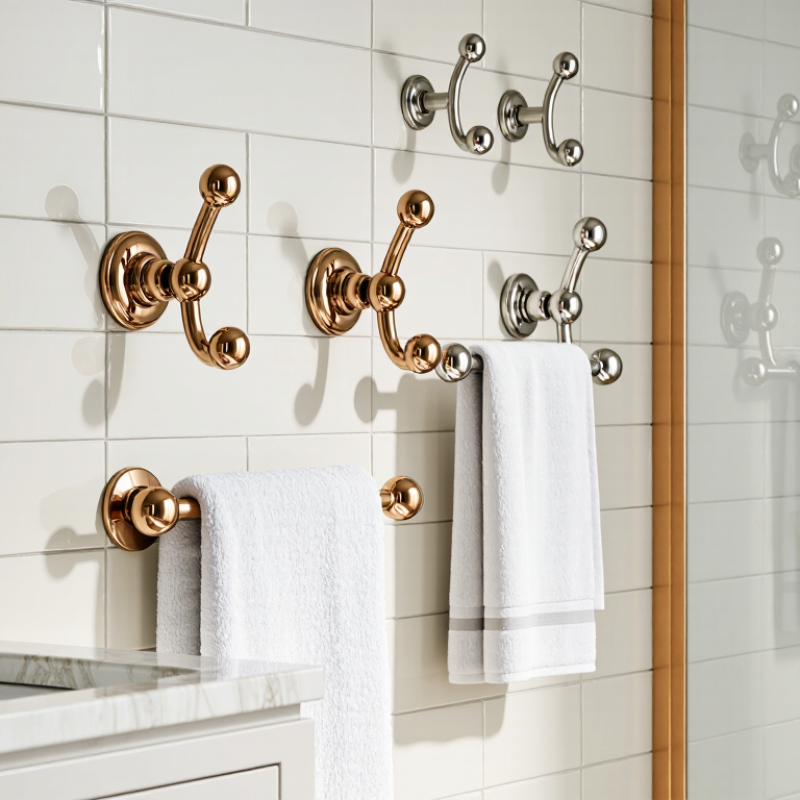
How to Choose the Best Brass Towel Hook?

Understanding Brass Towel Hooks and Their Main Benefits

How to Choose the Best Brass Towel Hook?

A brass towel hook is more than a decorative bathroom detail. It supports daily wet towels, repeated pulling, and frequent cleaning. Brass is a copper-zinc alloy, so it offers useful strength and a warm appearance. However, solid brass, plated metal, and brass-colored steel perform differently. Check the product specification before buying.

The 2024 Houzz U.S. Bathroom Trends Study surveyed 1,812 homeowners and reported continued interest in practical storage upgrades. That finding supports choosing hooks for function, not only appearance. A reliable hook should have a secure wall plate, rounded edges, and enough clearance for airflow. Better airflow helps towels dry faster.

The World Health Organization’s guidance on dampness and mould also connects persistent moisture with indoor health concerns. Still, a hook cannot replace ventilation. I once chose a beautiful, narrow hook that held a thick towel poorly. It looked right but worked badly.

Tips: Choose solid brass for heavier towels. Confirm the mounting hardware suits your wall type. Look for a protective finish, but expect some finishes to age. Wipe away standing water after cleaning. Avoid abrasive powders, which may damage lacquer or brushed surfaces. For shared bathrooms, use two hooks instead of one crowded hook. This small spacing improves drying and reduces slipping. ASTM material standards can help verify alloy information, although they do not guarantee installation quality. That part still depends on careful mounting.

Assessing Size, Weight Capacity, and Towel Storage Needs

Choosing the best brass towel hook starts with the towel, not the finish. A standard bath towel often measures about 27 by 54 inches, while heavier towels can exceed 700 grams when wet. Cotton Incorporated’s textile guidance shows that towel density varies widely, commonly from 400 to 900 GSM. That difference affects hook spacing, projection, and required strength.

Measure the wall area first. A single hook needs enough clearance for air to circulate around folded fabric. For two bath towels, a rail or two hooks spaced 20 to 24 inches apart usually prevents crowding. Houzz’s 2024 U.S. Bathroom Trends Study reported that homeowners continue prioritizing improved bathroom functionality during renovations. Storage planning matters more than decorative detail.

Check the hook’s tested weight capacity, not just its advertised material. Wet towels are heavier, and children may pull downward unexpectedly. A practical target is at least 5 pounds per hook, with secure screws or suitable wall anchors. Tile installation needs extra care. Brass can feel substantial, but solid appearance does not prove structural strength. I once chose an oversized hook for a narrow wall; it looked impressive and blocked cabinet access. That was poor planning. Confirm the base diameter, projection, mounting method, and cleaning instructions before purchase. Industry recommendations are useful, but actual household towel habits deserve the final test.

Comparing Brass Finishes, Styles, and Bathroom Design Compatibility

A brass towel hook should match your bathroom’s finish, shape, and daily use. According to the 2024 Houzz U.S. Bathroom Trends Study, nearly 2,000 homeowners reported bathroom upgrades, showing continued demand for practical, personalized details. Brass works especially well with warm tile, stone, oak, and cream-colored walls. Polished brass reflects light and suits classic interiors. Brushed brass hides fingerprints and feels calmer. Aged brass adds depth, but its uneven tone may look unfinished in a minimalist room.

Style matters as much as color. Choose a rounded hook for soft, spa-like bathrooms. Select a squared hook for contemporary cabinets and large-format tiles. Match its visual weight to nearby fixtures. A thin hook can disappear beside a heavy vanity. The NKBA 2024 Design Trends Report highlights warmer palettes and mixed-metal interiors, but mixing metals still needs control. Keep one dominant finish, then use brass as an intentional accent. I once paired bright brass with cool chrome, and the result felt accidental. That mistake taught me to compare samples under bathroom lighting.

Tips: Hold finish samples beside the tile and mirror. Check them in daylight and at night. Leave enough wall space for a towel to hang freely. Use solid mounting hardware, especially on hollow walls. The finish may age differently than expected, so request a real sample before ordering.

How to Choose the Best Brass Towel Hook? — Comparing Brass Finishes, Styles, and Bathroom Design Compatibility
Finish or Style Appearance Bathroom Design Compatibility Care and Maintenance Best For Things to Consider
Polished brass Bright, reflective gold tone that adds a noticeable decorative accent. Traditional, Art Deco, and glam bathrooms; pairs well with marble, white tile, and warm neutrals. Wipe regularly with a soft cloth. Water spots and fingerprints can show more readily on a glossy surface. Bathrooms where the hook is intended to be a focal detail. Check whether the surface is lacquered or otherwise coated; cleaning instructions vary by finish.
Brushed or satin brass Soft, low-sheen gold appearance with a subtle linear texture. Modern, transitional, and Scandinavian-inspired rooms; works well with stone, wood, and matte finishes. Use a soft cloth and mild soap when needed. Avoid abrasive pads that can scratch the surface. Everyday bathrooms where a warm metallic accent is wanted without a mirror-like shine. Brush direction and color can differ between manufacturers, so coordinating fixtures is easiest when finishes are sampled together.
Antique or aged brass Deeper, muted gold or brown tones, often with a deliberately aged appearance. Vintage, farmhouse, traditional, and eclectic bathrooms; complements dark tile, natural wood, and warm colors. Follow the maker’s care guidance. Avoid polishing unless the finish is specifically intended to be polished. Spaces that benefit from a softer, less polished metallic detail. “Antique” is not a single standardized color; compare samples with nearby faucets and cabinet hardware.
Unlacquered brass Natural brass that can gradually darken and develop a varied patina through exposure and use. Traditional, heritage, and relaxed interiors where evolving material character is welcome. Patina develops over time. Keep the surface dry when practical; polishing can restore brightness but also removes patina. Owners who appreciate a finish that changes with use rather than staying visually uniform. Appearance may vary across the hook and over time; it may not suit a preference for a consistently bright finish.
Minimal single-hook design Compact profile with one hanging point and little visual bulk. Contemporary bathrooms, small powder rooms, and uncluttered layouts. Clean around the mounting base and check that the hook is securely fixed to the wall. Hanging one hand towel or robe in a limited space. Confirm that the hook projection and shape can hold the intended item without slipping.
Double or multi-prong design Offers more than one hanging point, usually with a larger or more detailed silhouette. Family bathrooms and shared spaces; suits classic or transitional schemes depending on its shape. Allow enough room between nearby fixtures so towels can hang freely and dry. Holding multiple lightweight items in a compact area. Check the overall width and spacing; crowded hooks can make towels harder to remove and may slow drying.
Decorative traditional design May feature curved arms, rounded ends, or ornamental mounting details. Period-inspired, classic, and formal bathrooms; coordinates naturally with traditional-style fittings. Dust and wipe crevices gently to prevent residue from collecting around decorative details. Bathrooms where hardware is part of the room’s decorative scheme. Balance the hook’s detailing with the style and scale of nearby faucets, mirrors, and cabinet hardware.

Selection tip: Match the hook’s finish, scale, and level of detail to the bathroom’s other hardware. For secure installation, use suitable wall fixings or attach the hook to a stud where possible, and follow the product’s installation and care instructions.

Checking Installation Methods, Wall Support, and Hardware Quality

How to Choose the Best Brass Towel Hook?

A brass towel hook is only as reliable as its installation. Check the wall before admiring the finish. The 2023 American Housing Survey reports that the U.S. housing stock exceeds 145 million homes, many with mixed wall systems. That matters because drywall, tile, plaster, and masonry need different anchors.

On drywall, use a toggle bolt or a rated hollow-wall anchor. Near a stud, drive the screw into solid wood. For tile, drill slowly with a diamond bit, then install a suitable anchor behind the tile.

Wall support decides daily performance. A damp bath towel can pull surprisingly hard when removed quickly. Professional installers often prefer stud mounting, especially near showers or busy family bathrooms. If a stud is unavailable, check the anchor’s load rating, not just its appearance.

The U.S. Consumer Product Safety Commission continues to document thousands of annual bathroom-related injuries, although towel hooks are not isolated in those statistics. Poorly secured accessories can still become sharp, loose obstacles.

Small detail. Real consequence.

Hardware quality deserves equal attention. Look for corrosion-resistant brass, stainless-steel screws, and a concealed mounting plate with firm set screws. ASME A112.18.1/CSA B125.1 is a recognized plumbing-fixture standard, but it does not automatically certify every towel hook. Read the product specification carefully.

Surface color can hide weak metal or thin plating. I once trusted a heavy-looking hook that used soft screws; it loosened within months.

Weight can mislead. Choose verified materials, compatible anchors, and a mounting method suited to the wall.

Evaluating Durability, Maintenance Needs, and Overall Value

How to Choose the Best Brass Towel Hook?

Evaluating Durability, Maintenance Needs, and Overall Value

A dependable brass towel hook should handle daily pulling, damp air, and occasional careless use. Solid brass usually offers stronger structural performance than thin plated metal. However, material descriptions can be unclear. Check whether the hook, not only its visible cover, is brass. A sturdy backplate also reduces wobbling on drywall or tile. The mounting screws matter too. Small details often decide long-term reliability.

Bathroom humidity tests every finish. Lacquered surfaces resist tarnishing, but scratches can expose the metal beneath. Uncoated brass develops a deeper patina and needs more frequent polishing. I prefer a soft, dry cloth for routine cleaning. Avoid abrasive pads and harsh chlorine products. Wipe it dry.

Maintenance should fit your household habits. A hook near a shower may collect soap film within weeks. Smooth edges make cleaning easier, while deep grooves can trap moisture. During installation, I check the screw alignment and pull the hook firmly by hand. This simple test has revealed loose anchors before towels caused a problem.

Overall value combines lifespan, installation quality, appearance, and upkeep. A cheaper hook may become expensive after repeated replacement or repainting. Still, a high price does not guarantee solid construction. I once chose an attractive model with weak screws, and the hook tilted after several uses. That mistake changed my buying checklist. Look for clear specifications, suitable wall hardware, and realistic care instructions. Reviews can help, but photographs rarely prove metal thickness or mounting strength.

FAQS

Which brass finish works best in a bathroom?

Polished brass reflects light and suits classic rooms. Brushed brass shows fewer fingerprints. Aged brass adds depth, though its uneven tone may feel out of place in a minimalist space.

How can I match a towel hook to my bathroom style?

Rounded hooks pair well with soft, spa-like rooms. Squared shapes suit contemporary cabinets and large tiles. Compare the hook’s visual weight with nearby fixtures.

Should I check brass samples before ordering?

Yes. Hold a real sample beside the tile and mirror, then check it in daylight and at night. Bathroom lighting can change how the finish looks.

Is solid brass more durable than plated metal?

Solid brass generally offers stronger structural performance than thin plated metal. Check whether the hook itself is brass, not just its visible cover.

What should I know about brass hook maintenance?

Lacquered finishes resist tarnishing, but scratches may expose the metal. Uncoated brass develops a patina and needs more polishing. Use a soft cloth. Wipe it dry.

Where should I install a towel hook?

Leave enough wall space for the towel to hang freely. Near a shower, the hook may collect soap film within weeks, so smooth edges are easier to clean.

How can I prevent a towel hook from wobbling?

Use suitable wall hardware and check the backplate and screws. On hollow walls, secure mounting matters. Pull the installed hook firmly by hand before hanging a towel.

Does a higher price mean a better towel hook?

Not always. Check construction details, mounting hardware, and care instructions. I once chose an attractive hook with weak screws; it tilted after several uses. I should have checked more carefully.

Conclusion

Choosing the right Brass Towel Hook starts with understanding how it will be used. Consider the size and weight of the towels you plan to hang, how many hooks you need, and whether the available storage suits your daily routine. Compare finishes and styles with your bathroom’s fixtures and overall design so the hook feels like a natural fit.

Before purchasing, check how the hook is installed, whether your wall can support it, and whether the included hardware is appropriate for the surface. Solid construction and a well-made finish can help it withstand regular use, while simple cleaning requirements make upkeep easier. By balancing appearance, storage needs, installation, durability, and price, you can choose a hook that works well for your bathroom over time.


Sienna

Sienna

Sienna is a skilled marketing professional with a deep expertise in our company’s core products and services. With a passion for innovation and detail, she plays a pivotal role in crafting insightful blog posts that not only highlight the unique features of our offerings but also provide valuable......