Why Choose a Brass Soap Dish for Your Bathroom?
A bathroom accessory should do more than hold a bar of soap. It should handle daily moisture, support cleaner habits, and add quiet character to the room. A Brass Soap Dish can offer all three when it has proper drainage and a well-finished surface. Its warm gold tone works with white ceramic, stone countertops, dark wood, and brushed fixtures. It also develops a deeper patina over time, which many homeowners find attractive.
Brassware care specialist Ellen Ford explains, “Good brass design balances beauty, drainage, and the reality of everyday cleaning.” That practical view matters. A dish with raised feet or drainage slots keeps soap above standing water. This helps the bar dry faster and reduces soft, wasted edges. Solid brass may also feel more substantial than lightweight plastic or thin plated metal. Still, brass is not maintenance-free. Water spots, toothpaste, and mineral residue can dull its finish. A quick wipe with a soft cloth often prevents larger cleaning problems.
Small details matter.
Choosing a Brass Soap Dish also involves finish and construction. Lacquered brass usually keeps its original shine longer. Unlacquered brass changes naturally and may show fingerprints more easily. Neither choice is automatically better. The right option depends on your cleaning routine and design preference. I would not promise that brass suits every bathroom. In a humid space, poor ventilation can challenge any metal accessory. Yet with sensible placement and regular drying, brass can bring durable function and a more considered appearance to an ordinary sink area.
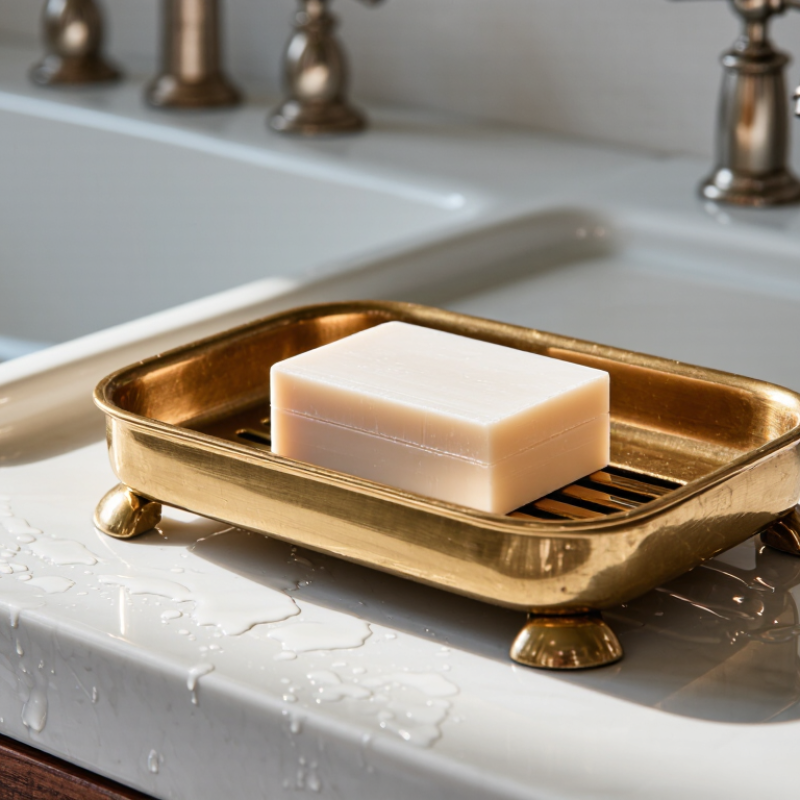
A brass soap dish is a small bathroom holder made from brass, an alloy of copper and zinc. It keeps a wet bar above the counter, allowing water to drain through slots or a raised base. That simple structure matters. Unlike coated plastic, solid brass can show its material character: warm color, visible machining, and gradual patina. The Copper Development Association describes brass as adaptable for forming, machining, and corrosion-resistant applications.
In a humid bathroom, the dish should not sit in pooled water. Look for sloped channels, open drainage, and rubber feet that protect stone or ceramic surfaces. The U.S. Environmental Protection Agency recognizes certain copper alloys for antimicrobial claims under controlled test conditions. Reported reductions can reach 99.9% for specified bacteria, but results depend on alloy, cleaning, and contact time. A brass dish is not a disinfectant. That distinction is important.
The U.S. Geological Survey’s Mineral Commodity Summaries 2024 identifies copper as a major industrial material used in building products and plumbing. This supports brass’s practical relevance, not a promise of unlimited bathroom life. From a user’s viewpoint, weight is useful; a heavier dish usually moves less when wet hands reach for soap. Still, brass can tarnish, and some finishes can scratch. I would wipe the underside weekly and dry trapped water. The honest drawback is upkeep. Choosing brass means accepting small marks as part of its character.
Bathroom hygiene depends on drainage, drying, and regular cleaning. A brass soap dish can help because its raised grooves keep soap above standing water. Less moisture means fewer slimy residues around the bar. That small design detail matters beside a damp sink. However, brass is not automatically antimicrobial. Its copper content and surface finish affect performance.
The U.S. Environmental Protection Agency reports that qualifying copper-alloy surfaces can reduce certain bacteria within two hours under controlled conditions. Brass may offer similar benefits when its composition meets applicable requirements. This does not replace cleaning. The Centers for Disease Control and Prevention recommends washing hands with soap for at least 20 seconds. A dirty dish can undermine that routine.
Use a soft cloth and mild detergent weekly. Rinse away soap film, then dry the grooves completely. Avoid harsh abrasives, which can damage the finish and create tiny rough areas.
In my experience, drainage is often overlooked. The dish looks attractive, yet water quietly collects underneath. A better design helps, but habits still decide hygiene. EPA testing occurs in controlled settings, not every busy family bathroom. That limitation deserves attention.
Why Choose a Brass Soap Dish for Your Bathroom?
Key Benefits of Brass in Moist Bathroom Environments
A brass soap dish suits bathrooms because it handles daily moisture with steady performance. A well-finished surface resists routine humidity better than many untreated metals. It also feels heavier and more stable beside a wet sink. That weight helps prevent sliding when hands are soapy. Brass can develop a warm patina over time. Some people enjoy this character, while others prefer a polished appearance. The choice depends on your cleaning habits and bathroom style.
Moisture still needs an exit. A dish with raised feet or drainage slots keeps soap above standing water. This reduces soft, wasteful soap and limits residue on the counter. During routine cleaning, rinse the dish and dry its underside. Use a mild cloth instead of abrasive powders, which may mark the finish. Brass is not maintenance-free. That fact is easy to overlook. In poorly ventilated bathrooms, water spots and tarnish may appear faster.
Tips: Place the dish away from direct shower spray. Empty trapped water every few days. Check the finish before using any cleaner. A small hidden test helps prevent accidental discoloration. Choose solid, smooth edges for easier cleaning. Avoid designs with narrow crevices. They collect soap quickly. Ventilation matters too. Open the door after showers, and wipe nearby surfaces when condensation remains.
Brass is a practical choice for moist bathroom environments because it is non-porous, durable, and naturally resistant to everyday humidity. Compared with common alternatives, brass combines low water absorption with strong thermal conductivity and a solid, long-lasting structure.
Key takeaway: Brass has a dense, stable structure and much higher thermal conductivity than stainless steel or ABS plastic. Its non-porous surface does not absorb bathroom moisture, while its copper content can also help limit the persistence of some microorganisms on the surface. Actual performance depends on the brass alloy, surface finish, cleaning routine, and exposure conditions.
A brass soap dish can add warmth to a bathroom without making the space feel overly decorated.
Its golden tone works well with white ceramic, stone, wood, and dark tiles. Polished brass creates a bright, refined look. Brushed brass feels softer and more contemporary. Hammered surfaces add texture and hide small water marks. An aged finish can suit traditional or rustic interiors, although it may change over time.
Design affects daily use.
Choose a dish with drainage slots or a raised inner platform, so the soap does not sit in water. A shallow tray looks neat beside a basin. A deeper dish feels safer in a busy family bathroom. Wall-mounted designs save counter space and keep the soap away from splashes. Place one near the basin for handwashing, or inside the shower at reachable chest height. Keep it away from the direct spray.
I once placed a soap dish too close to the faucet. It looked convenient, but constant moisture dulled the surface quickly. Placement matters more than expected.
Leave a small gap from the wall, and wipe the dish regularly with a soft cloth. Avoid harsh cleaners, which can damage protective coatings or alter the brass finish. A non-slip base is useful on smooth stone. Small details count.
A brass soap dish adds warmth and character to a bathroom. Its sturdy surface can handle daily use, while small drainage holes keep soap from sitting in water. However, moisture, soap residue, and humidity may gradually darken the metal. Cleaning it regularly protects both its appearance and its function.
Start by rinsing the dish with warm water. Use a soft cloth and a small amount of mild dish soap. Gently clean the corners, drainage holes, and underside. Dry every area immediately with a clean towel. If the brass looks heavily tarnished, check whether it is lacquered or plated first. Harsh acids, bleach, steel wool, and rough sponges can damage the finish. For unlacquered brass, use a suitable brass cleaner and test it on a hidden spot. Follow the product instructions carefully. I once polished too aggressively and created a dull patch. That mistake was avoidable.
Tips: Keep the dish away from standing water. Empty trapped soap every few days. Use a soft toothbrush around small openings. Do not mix cleaning products. A monthly gentle cleaning is often enough, but damp bathrooms may require more frequent care. If the finish changes unevenly, stop polishing and reassess the coating. A slightly aged surface can look attractive, but neglect may leave stubborn marks.
| Data Dimension | Typical Information | Practical Benefit or Care Guidance |
|---|---|---|
| Main Material | Brass is a copper-zinc alloy. | It provides a solid, durable material suitable for regular bathroom use. |
| Appearance | Brass has a naturally warm golden color that can become darker or less glossy over time. | Wipe the surface regularly to reduce water spots, soap residue, and visible tarnish. |
| Moisture Exposure | Constant moisture can accelerate surface discoloration and mineral deposits. | Keep the dish dry between uses and place it where excess water can drain away. |
| Drainage Design | Raised ridges or drainage holes allow water to move away from the soap. | Better drainage helps the soap dry faster and may reduce softening and residue buildup. |
| Routine Cleaning Frequency | A quick wipe after use and a more thorough cleaning about once a week are practical routines. | Frequent light cleaning is gentler than waiting for heavy deposits to form. |
| Basic Cleaning Solution | Use lukewarm water with a small amount of mild dish soap. | Apply with a soft cloth or non-abrasive sponge, then rinse and dry completely. |
| Removing Soap Residue | Warm water loosens fresh residue; a soft cloth can remove remaining film. | Avoid scraping, steel wool, and abrasive powders that can scratch the finish. |
| Tarnish Management | Unlacquered brass naturally develops a darker patina when exposed to air and moisture. | Polish only when desired, using a brass-safe product and following its instructions. |
| Chemical Safety | Strong acids, chlorine-based cleaners, and harsh abrasives may damage brass or its coating. | Choose a gentle cleaner and test it on a hidden area before treating the entire surface. |
| Drying Method | A dry microfiber or soft cotton cloth removes remaining moisture without abrasive action. | Drying helps limit water spots and reduces prolonged contact with bathroom humidity. |
| Coated Brass Consideration | A lacquered or coated surface should be cleaned gently without aggressive polishing. | Polishing a coated surface can remove or weaken the protective layer. |
| Expected Maintenance Result | Regular cleaning preserves cleanliness, while the natural patina may remain or develop depending on the finish. | Maintenance should focus on preventing residue and protecting the surface rather than guaranteeing a permanently new appearance. |
It is a bathroom holder made from copper and zinc. It keeps wet soap above the counter. Water escapes through slots or raised grooves.
Drainage prevents soap from sitting in pooled water. Sloped channels help water move away. Less moisture means less slimy residue. Small detail, big difference.
No, brass is not a disinfectant. Some copper-alloy surfaces may reduce certain bacteria under controlled conditions. Results depend on the alloy, finish, cleaning, and contact time. A household bathroom may behave differently.
Wipe it weekly with a soft cloth and mild detergent. Rinse away soap film. Dry the grooves and underside completely. Do not leave trapped water overnight.
Yes, harsh abrasives can scratch the finish. They may also create rough areas that collect residue. Gentle cleaning is safer. Scratches happen.
Choose a dish with rubber feet or a raised base. These features reduce contact with stone or ceramic surfaces. They also improve airflow beneath the dish. Check underneath regularly.
Usually, a heavier dish moves less beside a wet sink. That stability helps when reaching for soap with wet hands. Weight alone cannot fix poor drainage.
Not always. Brass can tarnish and develop a gradual patina. Some finishes may scratch with repeated use. Small marks can show its material character. That may be attractive, or annoying.
A Brass Soap Dish is a practical and elegant bathroom accessory designed to keep bar soap elevated and separated from standing water. By allowing air to circulate around the soap and letting excess moisture drain away, it helps the bar dry faster, reduces soft residue, and supports a cleaner, more organized sink or shower area. This simple design can improve everyday bathroom hygiene while adding a warm, timeless decorative touch.
Brass is especially suitable for moist environments because it is durable, stable, and resistant to everyday wear when properly maintained. Brass Soap Dish designs range from minimalist trays to wall-mounted holders, making them suitable for countertops, shower shelves, or areas beside the sink. To preserve its appearance, rinse away soap buildup, dry the surface regularly, and clean it gently with a soft cloth and mild soap. Avoid harsh abrasives and excessive moisture to help maintain the finish and extend its useful life.

Buterfleoge